Africa Tech Insights
Insights into Africa's Tech Evolution
MazaoHub Tanzania Platform Analysis: Features, Impact, and Opportunities.
Overview
MazaoHub is a pioneering platform designed to revolutionize the agricultural sector in Tanzania by connecting farmers directly with consumers and markets. The platform aims to enhance the efficiency of agricultural value chains, reduce post-harvest losses, and increase farmers' income through better access to market information. By leveraging technology, MazaoHub addresses the challenges of fragmented agricultural markets and empowers smallholder farmers. The platform not only serves as a marketplace but also as a knowledge hub, providing farmers with vital resources and support. The initiative aligns with Tanzania's goals for economic development and food security, making it a significant player in the region's agricultural landscape.
💡 Idea
The core idea behind MazaoHub is to create a digital ecosystem that facilitates direct transactions between farmers and buyers, thereby eliminating intermediaries and ensuring fair prices for both parties. This concept is grounded in the need to modernize agriculture in Tanzania, where a majority of the population relies on farming for livelihood. The platform offers features such as crop listing, real-time pricing, and a dynamic feedback system, allowing farmers to make informed decisions based on current market trends. In addition, it incorporates educational resources, providing farmers with insights on best practices, pest management, and sustainable farming techniques. By creating transparency in pricing and access to information, MazaoHub aims to uplift the agricultural community and contribute to national economic stability.
⚙️MazaoHub: How It Works
MazaoHub operates as an online platform accessible via web and mobile applications, enabling farmers to create profiles and list their produce for sale. Users can browse available crops, view pricing, and place orders directly through the platform, streamlining the purchasing process. The platform incorporates a rating and review system which fosters trust among users, encouraging higher engagement levels. Additionally, MazaoHub partners with local logistics companies to facilitate the delivery of goods, ensuring that products reach consumers efficiently. Through data analytics, the platform provides farmers with personalized insights into market demand trends, helping them adjust their production strategies accordingly. The user experience is further enhanced through educational webinars and interactive forums where farmers can learn and share knowledge.
🚀 Why It’s Amazing
MazaoHub distinguishes itself by directly addressing the fundamental issues faced by Tanzanian farmers, such as lack of market access and information asymmetry. The platform empowers users by providing tools and resources that enhance their business acumen and operational efficiency. Its emphasis on transparency and fairness in pricing not only benefits farmers but also cultivates consumer trust in the agricultural supply chain. The integration of educational components further enriches the platform, as it promotes sustainable agricultural practices while supporting local economies. By fostering a community of informed and connected farmers, MazaoHub contributes to the broader goal of food security and economic resilience in Tanzania. This holistic approach positions MazaoHub as a transformative force in the agricultural sector, making it a model for similar initiatives in other developing nations.
💻 Technical Analysis
The technical architecture of MazaoHub involves a multi-tiered approach encompassing frontend, backend, and database components for optimal performance and scalability. The frontend is built using responsive web technologies such as React or Angular, ensuring that users have a seamless experience across devices. The backend is powered by a robust framework, likely Node.js or Django, which handles user authentication, business logic, and transaction processing. For data storage, a relational database like PostgreSQL could be employed to manage user profiles, product listings, and transaction records effectively. The system integrates RESTful APIs that facilitate communication between the frontend and backend, as well as third-party services like payment gateways and logistics partners. To ensure scalability, cloud services such as AWS or Azure could be utilized, allowing MazaoHub to handle increased user loads without compromising performance. Additionally, employing data analytics tools will enable the platform to derive insights from user interactions and market trends, further enhancing its value proposition.
🧱 System Architecture
MazaoHub's architecture is designed to support modularity and scalability, ensuring that the platform can grow as user demand increases. At the core, the architecture consists of several key components: a frontend interface for user interactions, a backend server for processing requests, and a database for data storage. The frontend utilizes a single-page application architecture that allows for dynamic content updates without requiring full-page reloads. The backend operates on a microservices architecture, where different functionalities such as user management, order processing, and payment handling are encapsulated within distinct services. This design choice not only enhances maintainability but also allows for independent scaling of services based on demand. The database layer utilizes a combination of SQL for structured data and NoSQL for unstructured data, ensuring flexibility in data management. To enhance security and performance, the architecture employs load balancers, caching mechanisms, and secure API gateways, providing a robust framework for MazaoHub's operations.
🧭 MazaoHub: Platform Walkthrough
- Step 1: User Registration - Farmers and buyers register on the platform by providing necessary details, including contact information and farming credentials for farmers.,
- Step 2: Product Listing - Registered farmers can create listings for their produce, specifying quantities, prices, and any relevant details such as organic certification.,
- Step 3: Market Analysis - The platform analyzes market trends and provides farmers with insights on optimal pricing and demand forecasts based on real-time data.,
- Step 4: Order Processing - Buyers browse listings, place orders, and make payments through integrated payment gateways, ensuring secure transactions.,
- Step 5: Logistics Coordination - Once an order is placed, MazaoHub coordinates with local logistics partners to arrange for the delivery of products to buyers.,
- Step 6: Feedback Loop - After the transaction, both farmers and buyers can leave feedback, contributing to the platform's rating system and helping to build community trust.,
- Step 7: Educational Support - Farmers have access to resources and webinars that provide training on sustainable practices, market trends, and business management.,
- Step 8: Continuous Improvement - The platform collects user feedback and data analytics to refine features, enhance user experience, and adapt to changing market conditions.
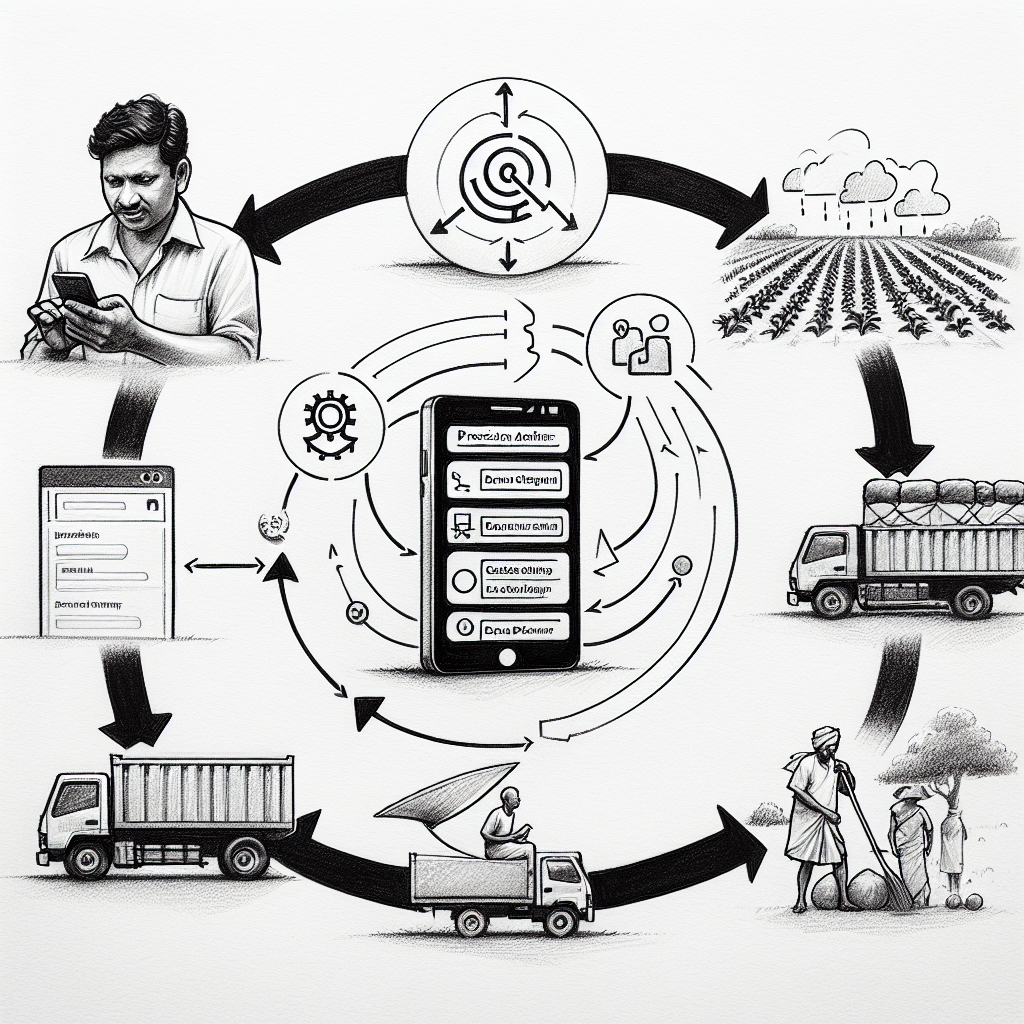 AI-generated system flow sketch
The content above is generated by an AI system using prompt-based instructions defined during development of this platform. It is designed to assist in understanding the topic by providing structured and automated insights. Users are encouraged to interpret the information as supplementary guidance.
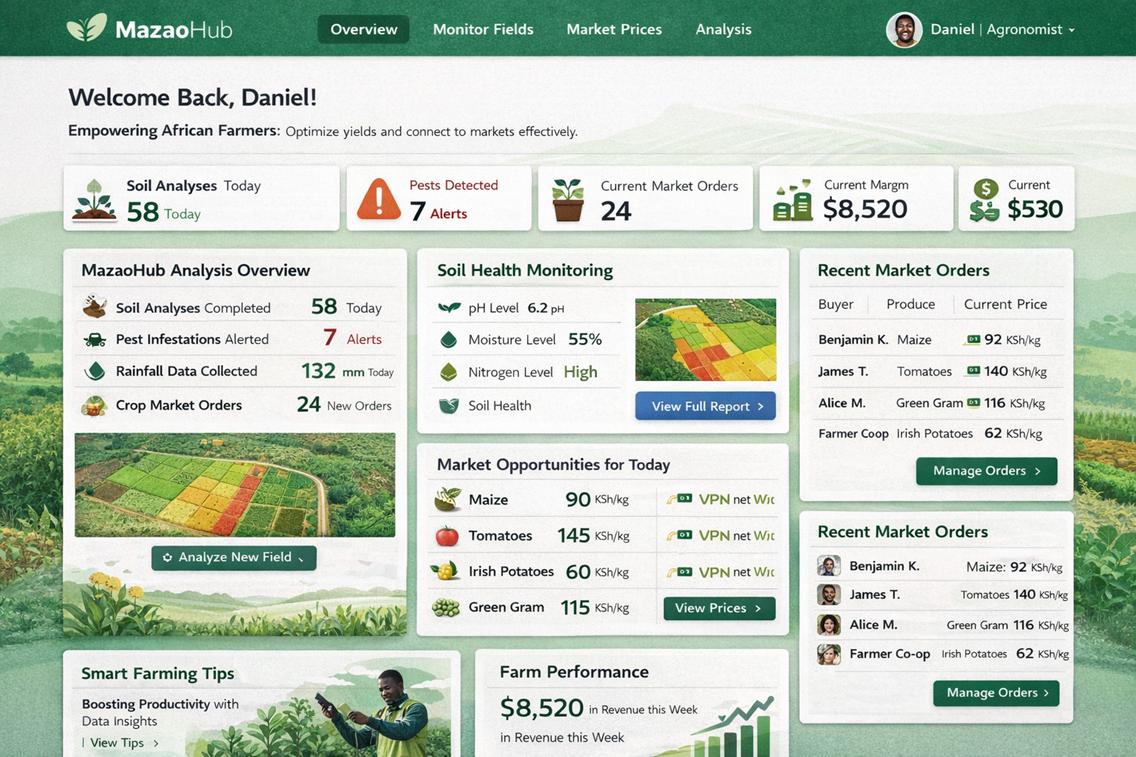 Image Credit: Illustrative AI-generated image. The actual app design may differ.

April 6, 2026 | 320 words | 2 min read
Mazaohub Analysis: Building a Unified Digital Marketplace Ecosystem in Tanzania
Mazaohub is an emerging digital platform designed to centralize services, marketplaces, and business interactions into a single accessible ecosystem. It aims to simplify how users discover products, connect with service providers, and engage in commerce across Tanzania’s growing digital economy.
Detailed Analysis
Mazaohub represents a new generation of digital platforms focused on solving fragmentation within emerging markets by creating a unified hub for commerce, services, and user engagement. In many African markets, users often rely on multiple disconnected platforms to fulfill everyday needs such as shopping, hiring services, or accessing local opportunities. Mazaohub addresses this inefficiency by aggregating these functions into a single, streamlined platform that enhances accessibility and convenience.
At its core, Mazaohub operates as a multi-sided marketplace, connecting vendors, service providers, and consumers through a centralized digital interface. This approach reduces friction in discovery and transaction processes, enabling users to browse offerings, compare options, and engage with providers without switching between multiple applications. For small and medium-sized enterprises, the platform offers an opportunity to gain visibility, reach a wider audience, and participate in the digital economy without requiring advanced technical infrastructure.
One of the key strengths of Mazaohub lies in its adaptability to local contexts. By focusing on regional needs such as mobile-first access, localized content, and flexible transaction models, the platform aligns closely with user behavior in Tanzania. This localized strategy increases adoption potential and ensures relevance in a competitive digital landscape.
From a technical perspective, Mazaohub likely relies on a scalable architecture that supports real-time interactions, user-generated content, and secure transactions. Backend systems manage listings, user accounts, and communication, while frontend interfaces prioritize usability and responsiveness across devices. Integration with payment gateways and communication tools further enhances the platform’s functionality, making it a comprehensive solution for both consumers and businesses.
In a broader context, Mazaohub reflects a growing trend toward ecosystem-based platforms that combine multiple services under one digital roof. Similar models have seen success globally, demonstrating the potential for platforms like Mazaohub to scale and evolve into essential digital infrastructure within their regions. By bridging gaps in accessibility, visibility, and efficiency, Mazaohub positions itself as a promising player in the transformation of Tanzania’s digital economy.
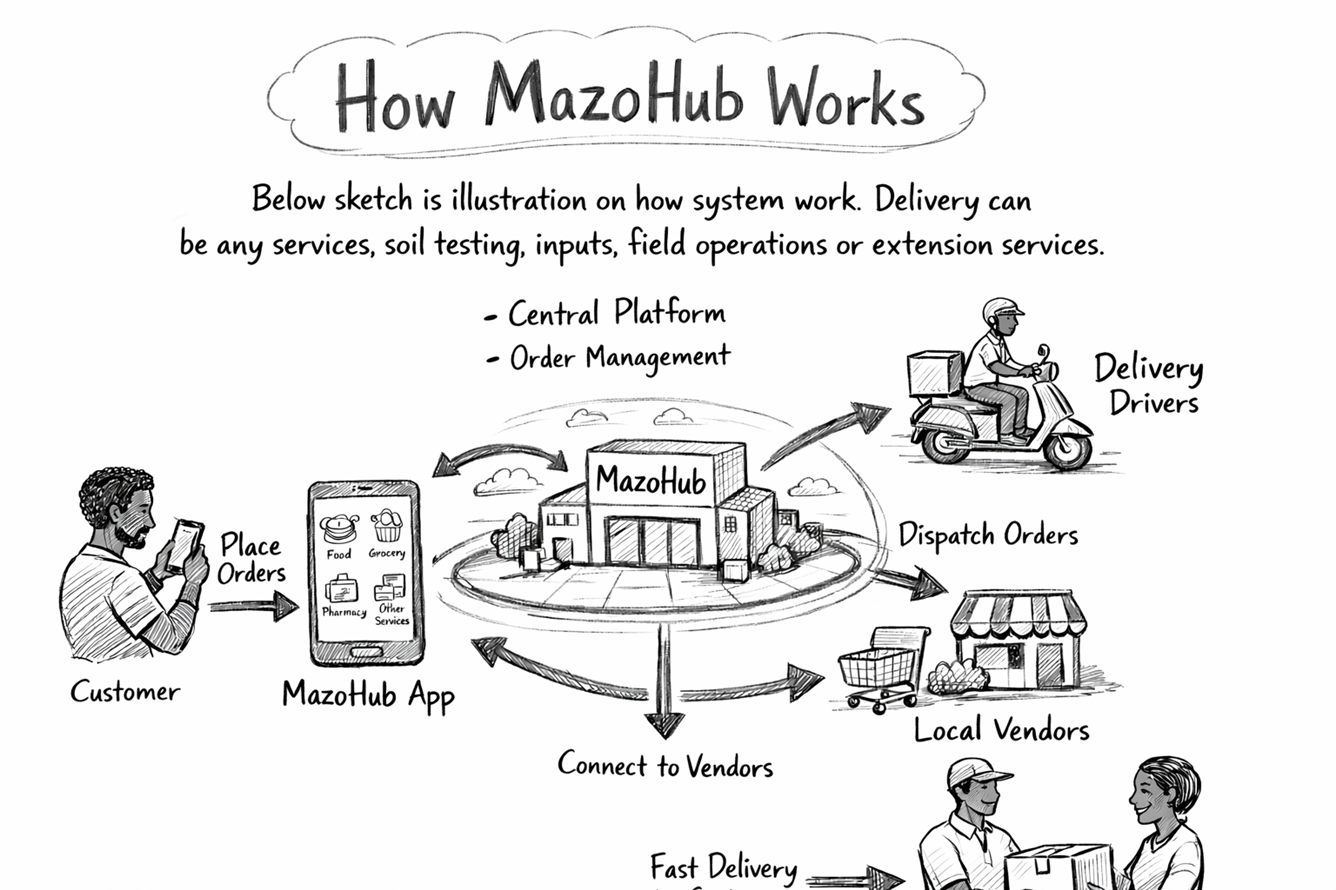
Global Platforms Similar to MazaoHub
MazaoHub follows a growing global model focused on connecting farmers to markets, buyers, and real-time price information. These platforms reduce middlemen inefficiencies, improve transparency, and help farmers sell produce at better prices. While features vary, they typically combine marketplace tools, pricing data, and logistics coordination to strengthen agricultural value chains
Twiga Foods, Ninjacart, ThriveAgric
Ahmed is an opinion writer with a keen interest in African technology. He is a full-stack software developer based in Seattle.
