Africa Tech Insights
Insights into Africa's Tech Evolution
Envisionit Deep AI — Platform Analysis
Overview
Envisionit Deep AI is an innovative startup focused on harnessing the power of artificial intelligence to transform visual data analysis across healthcare and diagnostic imaging. The company was founded by Dr. Jaishree Naidoo, a pediatric radiology specialist with extensive clinical experience, together with Terence Naidoo and Andrei Migatchev. Their combined expertise bridges healthcare, engineering, and artificial intelligence, aiming to develop a platform that interprets diagnostic imaging and provides actionable insights to support medical decision-making processes. The platform is designed to be user-friendly, enabling healthcare professionals to integrate advanced AI capabilities without requiring extensive technical knowledge. Envisionit Deep AI is positioned at the intersection of artificial intelligence, healthcare imaging, and data analytics, catering primarily to diagnostic medicine and clinical imaging applications.
💡 Idea
The core idea behind Envisionit Deep AI is to create a comprehensive platform that utilizes deep learning algorithms to analyze images and videos, extracting valuable information that can lead to improved operational efficiency. This platform leverages advanced neural networks to identify patterns, anomalies, and trends within visual data, enabling organizations to make data-driven decisions. For instance, in healthcare, the platform can assist radiologists in detecting early signs of diseases from medical images, thus facilitating timely interventions. The solution is primarily focused on radiology and medical imaging workflows, aiming to improve access and efficiency in diagnostic processes within healthcare systems. Its application is centered on healthcare use cases, particularly diagnostic imaging, rather than broader multi-industry visual data analysis.
⚙️Envisionit Deep AI: How It Works
Envisionit Deep AI operates by first ingesting visual data through various input channels, including images, videos, and live feeds. The platform employs state-of-the-art convolutional neural networks (CNNs) to preprocess the images, enhancing features that are crucial for analysis. Once the data is prepared, the AI algorithms analyze the visual content to identify key elements such as objects, faces, and anomalies. The findings are then processed through a machine learning model that generates insights tailored to the specific needs of the user. Users can access these insights through a web-based dashboard, which visualizes data analytics in an intuitive format. Furthermore, the platform allows for real-time monitoring and updates, ensuring that users receive the most current insights possible.
🚀 Why It’s Amazing
The significance of Envisionit Deep AI lies in its potential ability to democratize access to advanced AI technologies for businesses of various sizes, as seen in similar AI-powered platforms. By offering a system that could simplify the complexity of visual data analysis, it may enable organizations to leverage artificial intelligence without requiring deep technical expertise. This type of approach is often associated with improved efficiency and can encourage innovation across sectors, as companies become able to make more informed, data-driven decisions. Additionally, if designed for multi-domain use, such a platform could adapt to different industry needs, which is a common trend in modern AI systems. In healthcare contexts, for example, similar technologies are often aimed at supporting better diagnostic insights, while in commercial environments they may assist in optimizing operational workflows such as retail analytics. The potential for scalability in architectures like this is typically significant, as AI platforms built on cloud and modular systems can evolve alongside advancements in machine learning research. This allows users to benefit from ongoing improvements in model performance and infrastructure capabilities. Ultimately, Envisionit Deep AI can be viewed as part of a broader shift in how organizations are beginning to interact with and extract value from visual data, reflecting general trends in applied artificial intelligence systems.
💻 Technical Analysis
The technical infrastructure of Envisionit Deep AI could plausibly follow a modern AI-powered application architecture commonly used in similar computer vision and healthcare AI systems. The frontend is likely to be built using modern web frameworks such as React.js or similar technologies, enabling an interactive interface for uploading and reviewing visual data. On the backend, Python-based frameworks combined with machine learning libraries such as TensorFlow or PyTorch are commonly used in comparable systems for training and running deep learning models. An API layer (for example, REST or GraphQL) would typically handle communication between the frontend and backend services, ensuring efficient data exchange and processing. For data storage, scalable cloud-based solutions such as AWS S3 or similar object storage systems are often used for managing raw image data, while relational databases like PostgreSQL may be used for structured metadata and user information. In many modern deployments, cloud infrastructure also supports scalability, allowing systems to handle increasing data volumes and computational demands while maintaining performance. Overall, this type of architecture represents a common and practical approach for building AI-driven visual analysis platforms, although the exact implementation details of Envisionit Deep AI may differ depending on internal engineering decisions.
🧱 System Architecture
The architecture of Envisionit Deep AI could be designed to support high availability and scalability, which are common requirements for platforms handling large-scale visual data and concurrent users. In similar AI-driven systems, a microservices-based approach is often used, allowing different components to be developed, deployed, and scaled independently. In such an architecture, the user interface would typically interact with an API gateway that routes requests to various backend services responsible for tasks such as image processing, user management, and analytics. These services may be independently scalable depending on system load, helping optimize resource utilization. Data in comparable systems usually flows through multiple processing stages, starting from image ingestion, followed by preprocessing, analysis using deep learning models, and finally result aggregation for presentation to the user. In many modern deployments, the entire system is hosted on cloud infrastructure, where containerization and orchestration tools such as Kubernetes are commonly used to manage deployment, scaling, and system resilience, improving fault tolerance and operational efficiency.
🧭 Envisionit Deep AI: Platform Walkthrough
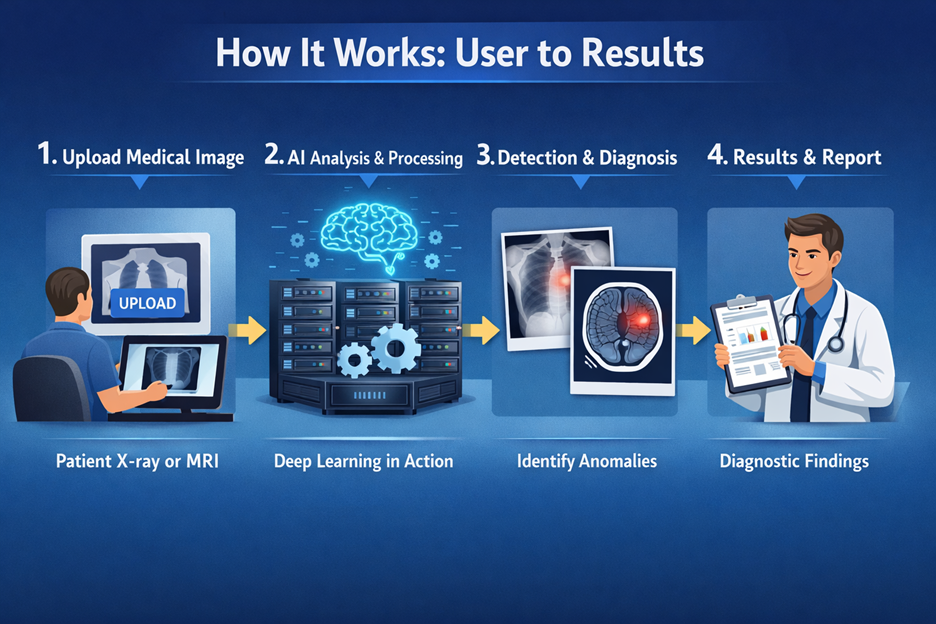
- Step 1: User uploads visual data (images or videos) through the platform's user-friendly interface.,
- Step 2: The platform preprocesses the data, enhancing image quality and preparing it for deep learning analysis.,
- Step 3: The preprocessed data is fed into convolutional neural networks that analyze the content, identifying relevant patterns and features.,
- Step 4: The AI model processes the analysis results, generating insights tailored to the user's specific needs and industry.,
- Step 5: Users access these insights through a web-based dashboard, where they can visualize data and derive actionable conclusions.,
- Step 6: The platform allows for real-time monitoring and updates, continuously improving its analytical capabilities based on new data.,
- Step 7: Users can integrate findings into their decision-making processes, optimizing operations and strategies based on AI-driven insights.
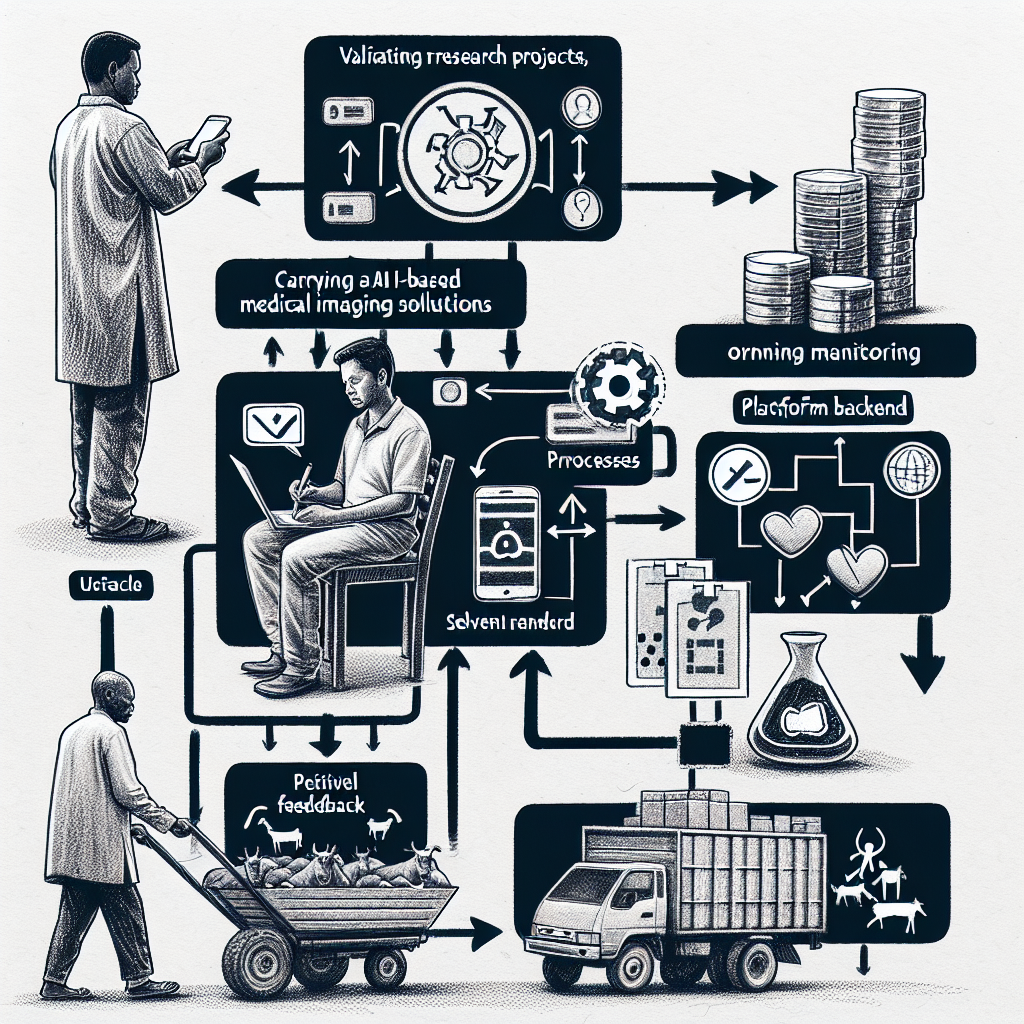 AI-generated system flow sketch
The content above is generated by an AI system using prompt-based instructions defined during development of this platform. It is designed to assist in understanding the topic by providing structured and automated insights. Users are encouraged to interpret the information as supplementary guidance.

April 18, 2026 | 358 words | 2 min read
Envisionit Deep AI
Envisionit Deep AI is a healthtech platform that uses artificial intelligence to transform how medical diagnoses are performed, particularly through medical imaging such as X-rays, CT scans, and MRIs. Unlike traditional healthcare systems where diagnosis depends heavily on human radiologists, this platform introduces a machine-assisted diagnostic layer that significantly improves speed, accuracy, and accessibility. It is especially impactful in Africa with limited medical personnel.
Detailed Analysis
CORE PRODUCTS | PLATFORM LAYERS
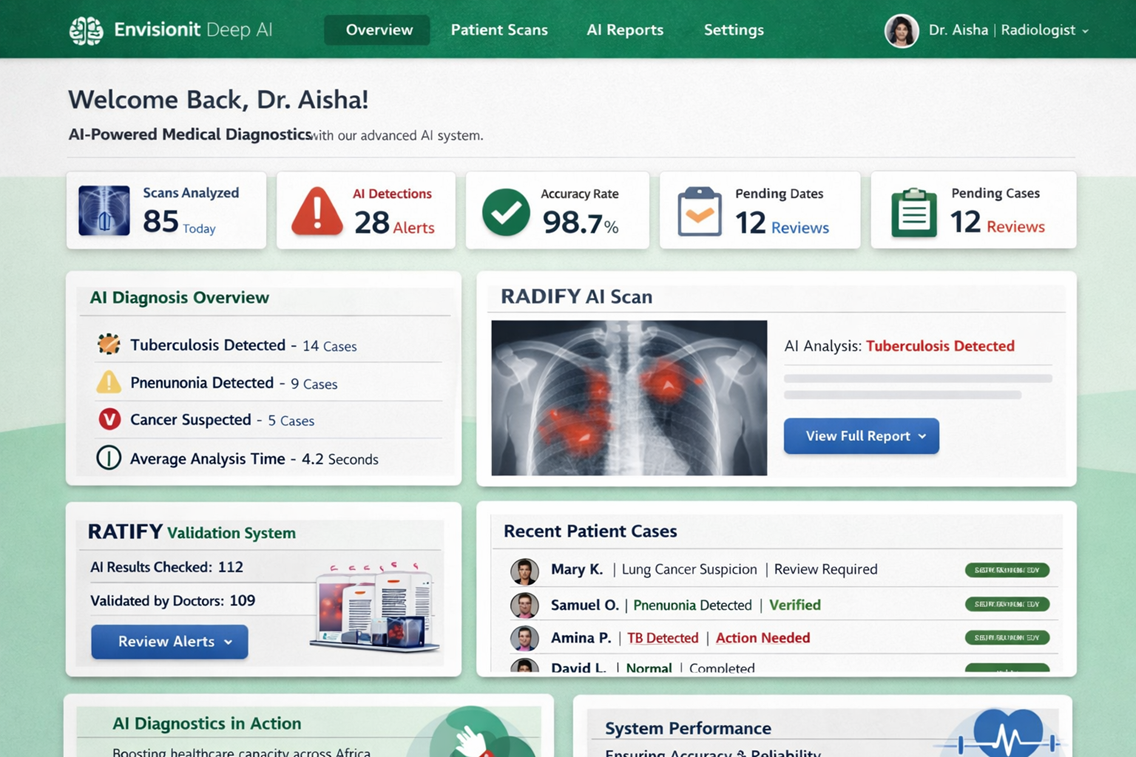
1. RADIFY (AI Diagnosis Engine)
AI model trained on medical imaging
Detects diseases like:
∘tuberculosis
∘pneumonia
∘breast cancer
Provides real-time results.
✨Can detect diseases in milliseconds.
2. RATIFY (AI Validation Layer)
Ensures AI results are:
∘accurate
∘safe
∘explainable
Allows doctors to verify AI outputs
CONCEPTUAL STRENGTH (WHY IT WORKS)
The platform succeeds because it combines:
✔️AI (core intelligence)
✔️Healthcare systems (real-world use)
✔️Validation layer (trust + compliance)
✔️Scalability (software-driven growth)
This creates a high-impact, real-world AI system, not just a theoretical model.
SOFTWARE & TECHNOLOGY STACK (INFERRED)
📌AI/ML models (deep learning for image recognition)
📌Computer vision systems
📌Cloud infrastructure (for processing & storage)
📌Integration with hospital imaging devices
📌API-based system for data flow
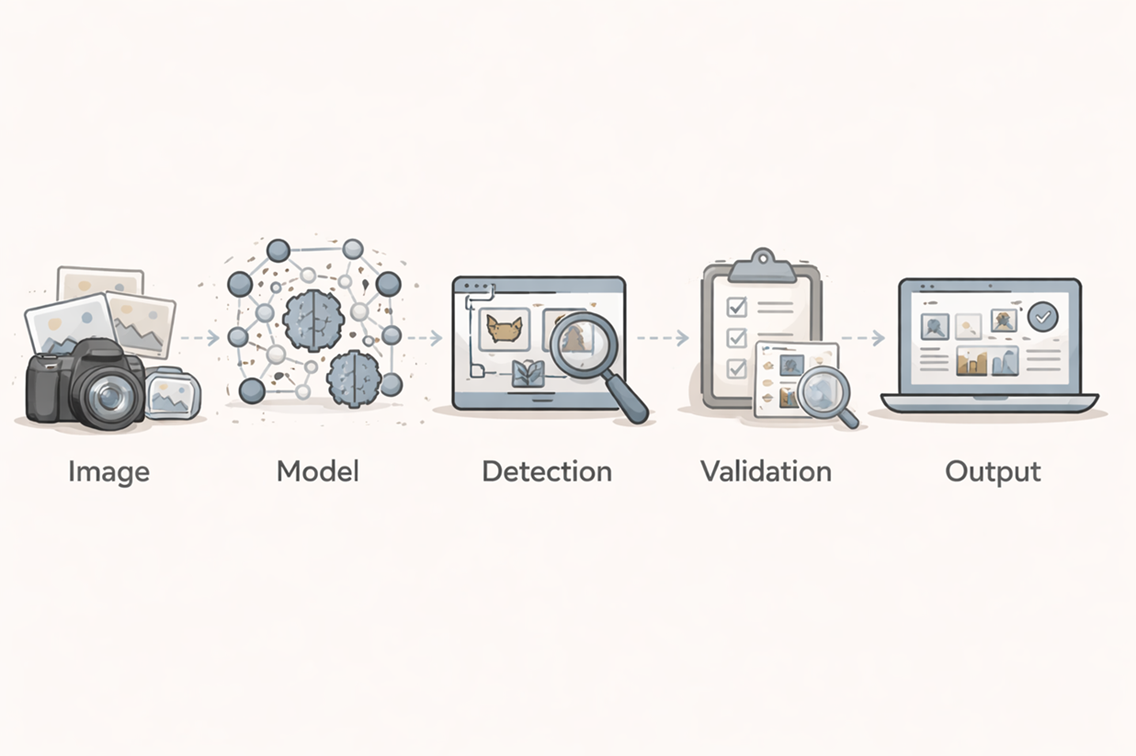
The system is essentially an AI pipeline:
Image → Model → Detection → Validation → Output.
WHY THIS IS CRUCIAL AND REVOLUTIONARY FOR AFRICA
The emergence of platforms like Envisionit Deep AI is particularly significant for Africa, where access to specialized medical expertise—especially radiologists—remains limited in many regions. By applying artificial intelligence to diagnostic imaging, such solutions have the potential to extend the reach of healthcare services beyond major urban centers, enabling faster and more accurate interpretation of medical scans even in underserved areas. This is critical in addressing delays in diagnosis, which often lead to poor health outcomes. What makes this approach revolutionary is its ability to bridge systemic gaps using scalable technology. Instead of relying solely on increasing the number of specialists—a process that takes years—AI-driven platforms can support existing healthcare workers with advanced diagnostic assistance. This not only improves efficiency but also helps standardize care across different regions. As Africa continues to invest in digital health infrastructure, innovations like this represent a shift toward more accessible, data-driven, and equitable healthcare systems.
Conclusion
Envisionit Deep AI demonstrates how artificial intelligence can transform critical sectors like healthcare when applied to real-world constraints. By combining AI diagnostics with validation systems and hospital integration, it creates a scalable and practical solution to one of Africa’s biggest challenges—access to quality healthcare. Its evolution from simple AI models to a full diagnostic platform highlights the importance of trust, validation, and system design in building impactful technology.
Global Platforms Similar to Envisionit Deep AI
Envisionit Deep AI reflects a broader movement within global healthcare technology, where artificial intelligence is increasingly used to enhance diagnostic imaging and clinical decision-making. Similar platforms are exploring how machine learning can assist radiologists in interpreting medical images, improving accuracy, and expanding access to diagnostic services, especially in regions with limited medical infrastructure. By leveraging AI-driven pattern recognition and scalable cloud-based systems, these solutions aim to reduce bottlenecks in radiology workflows and support faster, more informed diagnoses. As healthcare systems continue to adopt digital tools, platforms like Envisionit Deep AI illustrate how AI can play a critical role in bridging gaps in medical expertise and infrastructure.
Qure.ai, Aidoc, PaxeraHealth, Newton's Tree, Cerebriu
Ahmed is an opinion writer with a keen interest in African technology. He is a full-stack software developer based in Seattle.
