Africa Tech Insights
Insights into Africa's Tech Evolution
Insights
Tech-Driven Tourism: How Innovation is Transforming Africa's Tourism Industry
The transformative impact of technology on Africa's tourism industry, making travel more accessible and enriching.
 By Ahmed I Elmi |
Estimated Reading Time: 6 min |
Total Words:
1020 |
Published: 18 March 2025
| 114 views
By Ahmed I Elmi |
Estimated Reading Time: 6 min |
Total Words:
1020 |
Published: 18 March 2025
| 114 views
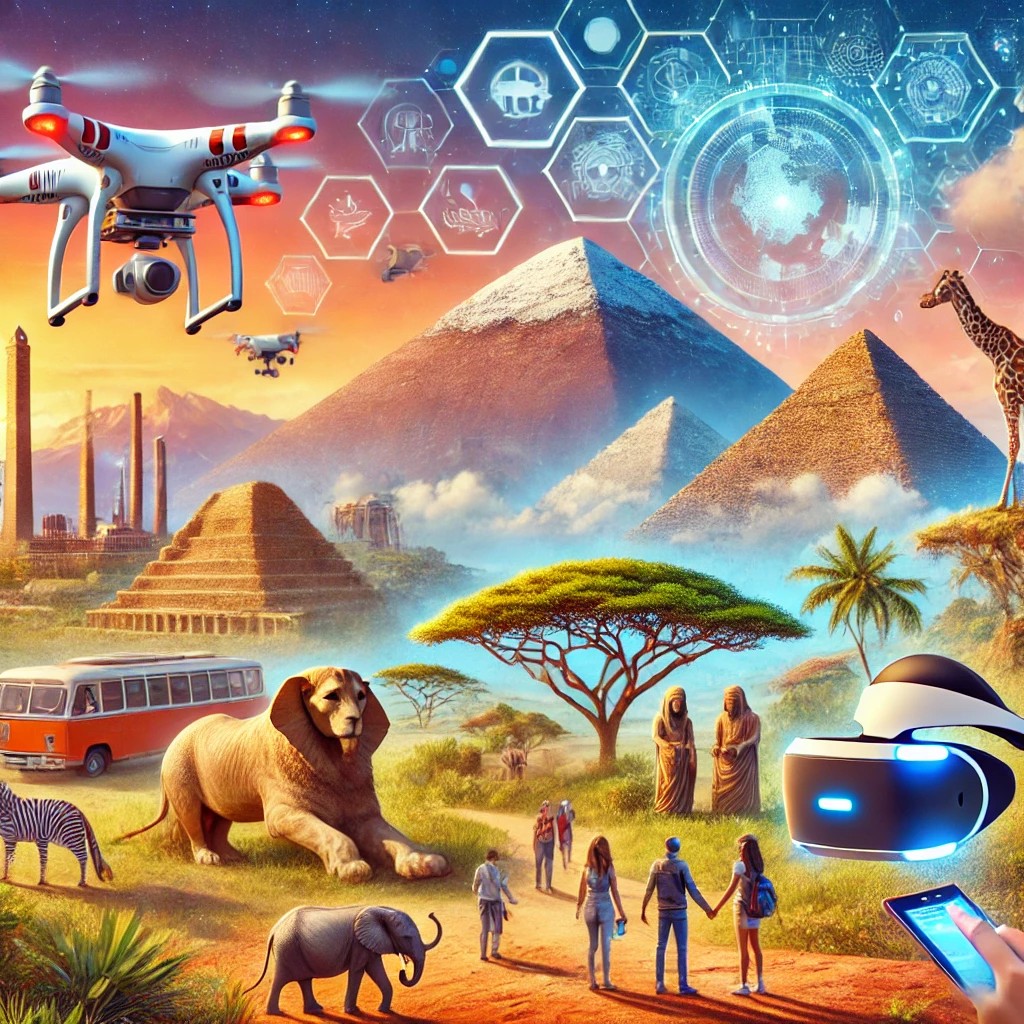
Image Credit: The mage created using DALL·E
The tourism industry has long been a significant contributor to many African economies. The combination of natural wonders, rich cultures, and historical landmarks continues to attract travelers worldwide. However, as technology reshapes sectors across the globe, tourism in Africa is not being left behind. Innovations like AI, virtual reality (VR), and digital platforms are transforming how travelers experience destinations. But more importantly, these advancements have the potential to create more jobs than other sectors. In South Africa, Tanzania, and Egypt—three of Africa’s top tourist destinations—the integration of technology can expand tourism’s economic footprint even further.
In Context
Tourism is one of the most promising sectors for the African continent. According to the World Travel & Tourism Council (WTTC), in 2019, the tourism sector directly and indirectly contributed 6.9% of Africa’s GDP, supporting 24.6 million jobs. South Africa, Tanzania, and Egypt are among the top countries where tourism plays a pivotal role. In South Africa alone, the sector contributed ZAR 425.8 billion ($29 billion) to the economy, representing 8.6% of GDP and supporting nearly 1.5 million jobs in 2019.
Technology, ranging from AI-driven tourism platforms to digital payment systems, is enabling the sector to scale even further. What’s key to this is that unlike other industries threatened by automation, tourism relies heavily on human-centered services, making it one of the least likely to be fully automated. With new technologies enhancing efficiency, the demand for human workers increases, leading to more job creation.
Go Deeper
AI and Data Analytics
Artificial intelligence (AI) is already playing a crucial role in tourism, especially through personalized customer experiences and efficient service delivery. AI-powered chatbots, for example, help travelers find the best deals, book hotels, or plan itineraries. Companies such as Expedia and Booking.com have already integrated AI chatbots to streamline the customer experience.
For Africa, these innovations are vital. In places like Tanzania, where tourists embark on safaris or climb Mount Kilimanjaro, personalized travel assistance can add immense value to the visitor experience. Moreover, AI-driven analytics can help governments and tourism boards monitor tourist behavior, improve destination management, and create new strategies to attract international travelers.
Virtual Reality and Augmented Reality (VR/AR)
Another technology disrupting tourism is virtual and augmented reality. With VR, potential tourists can explore African destinations virtually before booking their trips. These immersive experiences can showcase wildlife safaris, scenic landscapes, and cultural events in a way that is more engaging than traditional media. Companies like Google are leading the charge with their “Google Expeditions,” which allow users to explore over 900 global destinations in virtual reality.
For instance, South Africa has already started using virtual reality tours to promote its national parks and coastal areas. Egypt, home to the Pyramids and other ancient landmarks, can use augmented reality to enhance visitors’ experiences by providing real-time information about historical sites through AR apps.
Digital Platforms and Job Creation
Digital platforms that connect tourists with local guides, experiences, and accommodations are thriving. Platforms like Airbnb and Viator are bringing more opportunities for local entrepreneurs to tap into the global travel market. In Tanzania, many local communities now offer homestays through digital platforms, providing tourists with more personalized cultural experiences while generating income for local families.
Most importantly, the adoption of these digital platforms significantly contributes to job creation. According to Airbnb’s economic impact report, the platform contributed $6.5 billion to African economies in 2020 alone. With increased internet penetration and mobile phone usage in Africa, these platforms are poised to expand further.
What People Say
Industry Leaders' Viewpoints
In 2022, Gloria Guevara, the former CEO of WTTC, highlighted that “technology will play a key role in recovery post-COVID-19 and beyond, especially in boosting the travel and tourism sector.” She added that “for Africa, tech-driven solutions will not only drive growth but also generate jobs and reduce unemployment.”
African tourism experts also emphasize how the blend of technology and human-centered services in tourism creates a unique space where employment opportunities thrive. The labor-intensive nature of tourism ensures that it doesn’t fall prey to the risks of mass automation, as seen in other industries like manufacturing.
Why It’s a Big Deal for Africa
Tourism stands out as one of the few sectors where technological advancements directly lead to job creation. Unlike sectors such as agriculture or manufacturing, where automation can replace human labor, tourism requires a combination of digital efficiency and human interaction. According to a 2019 International Labour Organization (ILO) report, the travel and tourism sector is among the world’s largest employers, supporting 1 in 10 jobs globally.
In Africa, this is especially important. In Egypt, tourism employs over 2 million people. In South Africa, 1 in 12 jobs is tied to the tourism industry. Tanzania, home to iconic sites like Serengeti National Park, creates hundreds of thousands of jobs through tourism, from guides and hotel staff to transport services. If technology can scale up tourism’s efficiency and reach, it will also scale up job creation.
Beyond direct employment, tourism stimulates other industries such as transportation, hospitality, retail, and food services. In the case of Tanzania, where safari tourism dominates, many rural communities depend on tourism revenue. This sector’s expansion, powered by technology, will also uplift these communities economically.
The Future of Tech-Driven Tourism in Africa
The growth potential for tech-enhanced tourism in Africa is immense. With digital payments, booking platforms, AI-driven insights, and immersive travel experiences, the industry can not only increase its contribution to GDP but also generate millions of jobs across the continent. Countries like South Africa, Tanzania, and Egypt stand to benefit the most due to their well-established tourism infrastructure and global appeal. As these nations continue to adopt technological innovations, tourism will remain a key economic driver for Africa, helping the continent address unemployment and boost its global competitiveness.
Finally, Tech-driven tourism is reshaping how people travel and experience destinations. For Africa, embracing technology in the tourism sector means creating jobs, improving service delivery, and positioning the continent as a top global destination. As countries like South Africa, Tanzania, and Egypt continue to invest in these technologies, they are laying the groundwork for a future where tourism remains a powerful engine of economic growth.
This is an opinion piece. The views expressed in this article are those of just the author.
Contact the author: contactauthor@africatechinsights.com
