Africa Tech Insights
Insights into Africa's Tech Evolution
Op-Ed
AI Revolutionizing African Agriculture: How Technology is Boosting Yields and Securing the Future
The artificial intelligence (AI) is transforming Africa's agricultural sector, helping farmers boost productivity, adapt to climate change, and access new markets. With AI-powered tools for precision farming, weather forecasting, and supply chain optimization, the future of African agriculture looks promising, offering solutions to food security and sustainability challenges across the...
 By Guest Writer |
Estimated Reading Time: 5 min |
Total Words:
973 |
Published: 21 March 2025
| 104 views
By Guest Writer |
Estimated Reading Time: 5 min |
Total Words:
973 |
Published: 21 March 2025
| 104 views
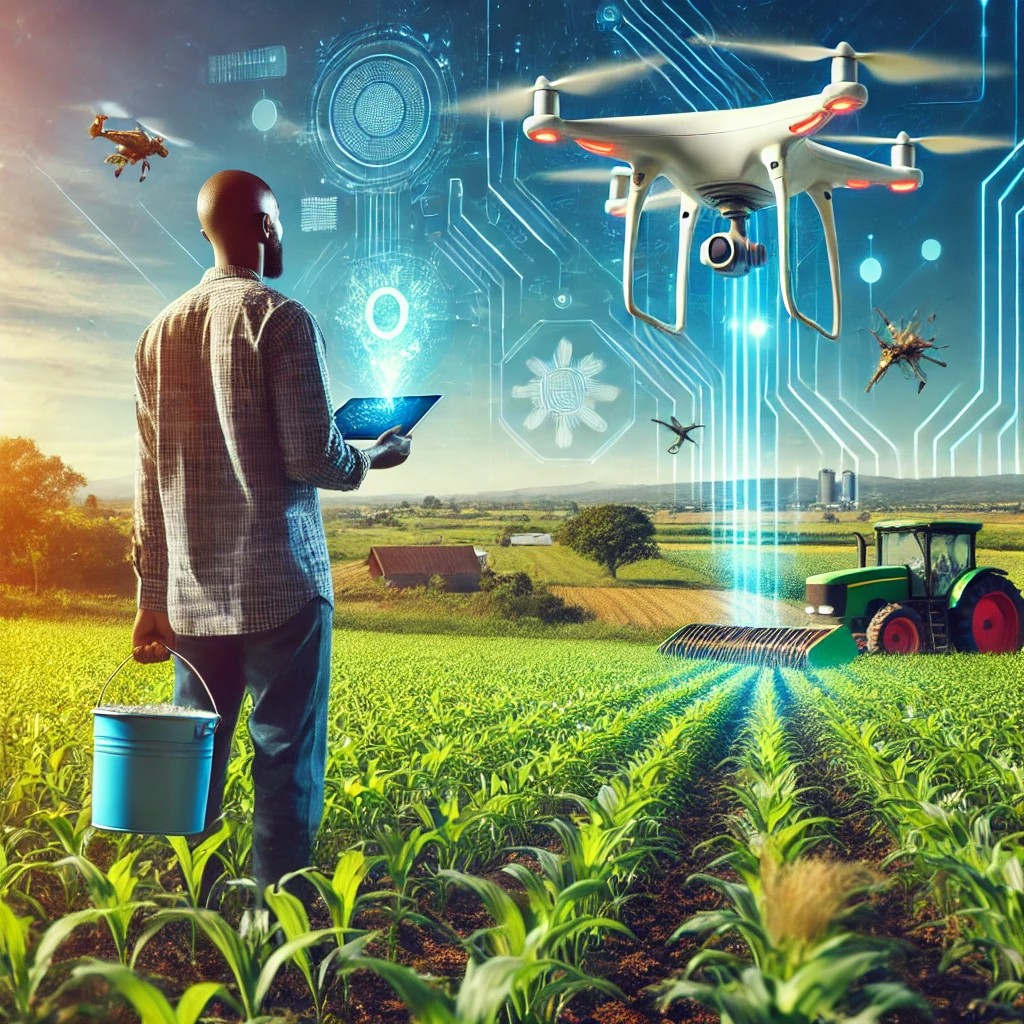
Image Credit: The mage created using DALL·E
Agriculture plays a pivotal role in Africa's economy, employing over 60% of the continent’s population and contributing around 23% to its GDP, according to the World Bank. Despite this, Africa remains highly vulnerable to food insecurity, climate change, and inefficiencies in agricultural production. Emerging technologies, particularly Artificial Intelligence (AI), have the potential to revolutionize the sector, helping farmers tackle the myriad of challenges they face. This article delves into how AI is transforming agriculture in Africa, breaking down its relevance, deeper implications, and the voices of those impacted.
In Context: Africa's Agricultural Landscape
Africa is home to vast expanses of fertile land, yet it struggles to meet its food demands. The African Union estimates that the continent spends about $35 billion annually on food imports, a figure that is expected to rise to $110 billion by 2025 if current trends persist. Smallholder farmers—who make up the majority of the agricultural workforce—grapple with issues such as low productivity, poor access to markets, erratic weather patterns, and lack of modern farming tools. Despite Africa’s untapped agricultural potential, these barriers continue to impede its capacity to achieve food security and sustainable growth.
This is where AI can make a profound difference. By integrating machine learning, predictive analytics, and automation, AI can enhance decision-making, optimize resource use, and improve crop yields, giving the continent a chance to harness its full agricultural potential.
Go Deeper: How AI is Transforming Agriculture in Africa
-
Precision Farming and Data Analytics
One of the most notable ways AI benefits African agriculture is through precision farming. AI-powered tools and sensors gather data on soil health, moisture levels, crop growth, and weather conditions. Farmers can use this information to make informed decisions about when and where to plant, water, and fertilize crops. For example, Hello Tractor, a Kenya-based startup, uses AI to connect smallholder farmers with tractor owners through a digital platform, optimizing resource allocation and improving productivity.AI can also predict crop diseases and pest infestations. The International Institute of Tropical Agriculture (IITA) has employed AI to develop a smartphone app called Nuru, which helps farmers identify diseases in cassava plants—one of Africa’s staple crops—by analyzing images. This early detection helps farmers mitigate losses and take preventive measures before diseases spread.
-
Weather Forecasting and Climate Adaptation
Climate change has introduced unprecedented challenges to Africa’s agricultural sector, with unpredictable rainfall patterns and frequent droughts becoming the norm. AI-powered climate models and weather prediction tools are providing farmers with more accurate and hyper-local forecasts. Apps like Ignitia, a weather forecasting service tailored for smallholder farmers in West Africa, use AI to deliver precise, location-specific weather data via SMS. This helps farmers plan their planting and harvesting seasons better, reducing losses due to unexpected weather conditions. -
Market Access and Supply Chain Optimization
AI also enhances market access for African farmers, many of whom face difficulties in reaching buyers. Platforms like Twiga Foods in Kenya leverage AI to connect farmers with vendors in urban markets. This AI-driven marketplace provides real-time pricing data, optimizes supply chains, and reduces post-harvest losses. By cutting out intermediaries, AI helps smallholder farmers increase their profit margins and build more sustainable businesses.
What People Are Saying: Voices from the Ground
The adoption of AI in African agriculture has been met with optimism, especially among technology advocates and agricultural experts. A farmer from Ghana, who uses AI-powered drones to monitor his crops, stated: “With AI, I don’t have to guess anymore. I know exactly what’s going on in my field.” This sentiment is echoed by other farmers who have benefited from AI-based tools for disease detection, weather forecasting, and market insights.
However, there are concerns about the accessibility and affordability of AI technology for smallholder farmers. According to a report by McKinsey & Company, only a fraction of Africa’s agricultural workforce currently has access to the internet or smartphones. Without proper infrastructure, AI solutions may only be available to wealthier, larger farms, leaving smallholder farmers at a disadvantage.
Agricultural experts argue that for AI to be truly transformative, it must be accompanied by education and capacity-building initiatives to ensure that all farmers, regardless of their size or wealth, can benefit from it.
Why It Is a Big Deal for Africa
The integration of AI into agriculture is a game-changer for Africa for several reasons. First, it promises to bridge the gap between food production and food demand, helping African nations reduce their reliance on imports. With AI, African farmers can achieve higher productivity and profitability by making data-driven decisions that optimize resources and minimize waste.
Second, AI can help African agriculture become more resilient to the impacts of climate change. As rainfall patterns shift and temperatures rise, AI-powered forecasting and climate models can enable farmers to adapt their practices, ensuring that they are better prepared for extreme weather events. This could be the key to maintaining food security on a continent where millions of people still face hunger.
Finally, AI has the potential to democratize access to markets, allowing smallholder farmers to compete on a level playing field with larger farms. By connecting farmers to buyers, optimizing supply chains, and providing real-time data, AI can help reduce inequality in the agricultural sector and promote sustainable development.
A Future Powered by AI
AI offers immense potential for transforming Africa’s agriculture sector, providing farmers with tools to improve efficiency, adapt to climate change, and access new markets. As more farmers and agricultural organizations embrace AI-driven solutions, the continent could witness a new era of agricultural innovation and food security. However, for this potential to be fully realized, governments and stakeholders must invest in digital infrastructure, training, and capacity-building to ensure that the benefits of AI are accessible to all.
By embracing AI, Africa can not only feed its people but also establish itself as a key player in the global agricultural market.
This is an opinion piece. The views expressed in this article are those of just the author.
Contact the author: contactauthor@africatechinsights.com
