Africa Tech Insights
Insights into Africa's Tech Evolution
Op-Ed
African Development Bank: Powering Africa’s Progress and Future Growth.
The African Development Bank (AfDB) plays a vital role in advancing economic development and social progress across the continent. By financing major projects in infrastructure, energy, agriculture, and digital transformation, the bank helps African countries strengthen their economies and improve living standards.
 By Ahmed I Elmi |
Estimated Reading Time: 4 min |
Total Words:
733 |
Published: 15 February 2026
| 13 views
By Ahmed I Elmi |
Estimated Reading Time: 4 min |
Total Words:
733 |
Published: 15 February 2026
| 13 views
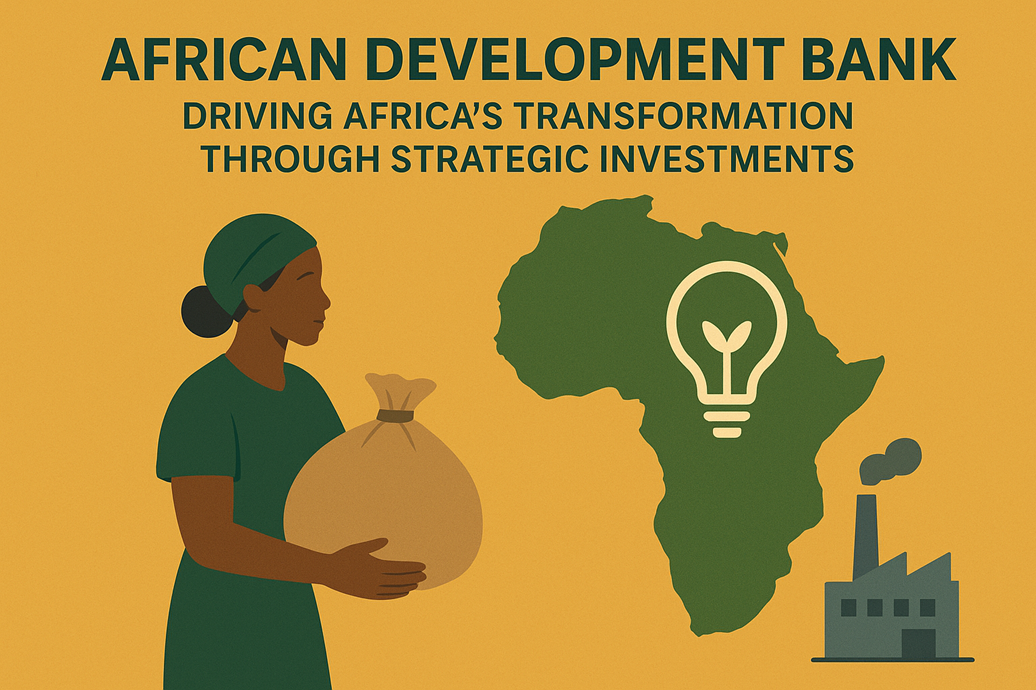
Image Credit: DELLE
What You May Not Know
Beyond its visible infrastructure projects, the African Development Bank has quietly delivered wide-reaching social impact. In recent years, AfDB-financed programs have helped over 20 million Africans gain access to electricity, more than 60 million people access clean water, and tens of millions benefit from improved transport and healthcare systems.
The Bank has also supported over one million farmers with climate-smart technologies, increasing yields by as much as 30–50% in some regions, while strengthening resilience against droughts and unpredictable weather patterns. These are not isolated gains—they represent structural improvements in livelihoods and productivity across the continent.
In 2024 alone, the AfDB approved over $10 billion in financing, one of the highest levels in its history. A growing share—estimated at 35–40% of total investments—is now directed toward climate finance, including renewable energy, sustainable agriculture, and resilient infrastructure. This shift reflects a strategic repositioning: Africa is not only adapting to climate change but increasingly becoming part of the global green economy supply chain.
Key Impact Data Snapshot
| Sector | Estimated Impact (Recent Years) |
|---|---|
| Electricity Access | 20+ million people connected |
| Clean Water Access | 60+ million beneficiaries |
| Agriculture Support | 1+ million farmers assisted |
| Transport Infrastructure | 100,000+ km of roads improved |
| Climate Finance Share | ~35–40% of total portfolio |
| 2024 Financing | $10+ billion approved |
Visual Trend: AfDB Financing Growth
12 | █
10 | █ █
8 | █ █ █
6 | █ █ █ █
4 | █ █ █ █ █
2 | █ █ █ █ █ █
--------------------------------
2020 2021 2022 2023 2024
Trend insight: AfDB financing has steadily increased, with a noticeable acceleration after 2021—driven by post-pandemic recovery, climate urgency, and infrastructure demand.
Next Frontier
Looking ahead, the AfDB’s ambitions are firmly focused on scale and sustainability. One flagship initiative aims to provide electricity access to 300 million Africans by 2030, recognizing that energy underpins industrialization, education, and digital transformation.
The Bank is also scaling investment in regional trade infrastructure to unlock the full potential of the African Continental Free Trade Area. Efficient cross-border transport, logistics corridors, and digital trade systems are expected to increase intra-African trade—which currently remains below 20%, far lower than Europe or Asia.
Youth and the Demographic Opportunity
Africa’s population is projected to reach 2.5 billion by 2050, with over 60% under the age of 25. The AfDB is responding by investing in:
- Skills development programs
- Digital innovation hubs
- Startup financing platforms
Initiatives like “Jobs for Youth in Africa” aim to create 25 million jobs and equip 50 million young people with skills—a necessary intervention to avoid unemployment-driven instability while unlocking a massive labor advantage.
What People Say
Under the leadership of Akinwumi Adesina, the Bank has emphasized a critical shift in mindset: Africa’s development must be driven by investment, not aid.
This philosophy has reshaped how development finance is perceived. Rather than dependency, the focus is now on bankable projects, returns, and long-term sustainability. Analysts often point out that AfDB’s credibility in global capital markets allows it to mobilize additional funding far beyond its own balance sheet.
Regional Impact You May Not See
One of the AfDB’s greatest strengths lies in its tailored regional strategy:
- Fragile states → focus on water, healthcare, and basic infrastructure
- Emerging economies → industrial zones, financial systems, and exports
- Landlocked countries → transport corridors and market access
This targeted approach reduces inequality between regions and strengthens continental integration, ensuring growth is not concentrated in a few economies.
Powering the Private Sector and Jobs
The AfDB has increasingly positioned the private sector as a growth engine. Through loans, guarantees, and equity investments, it has supported thousands of SMEs, particularly in:
- Agribusiness
- Renewable energy
- Transport and logistics
- Digital services
SMEs account for up to 80% of employment in Africa, yet face major financing gaps. By closing this gap, the Bank is directly influencing job creation and economic diversification.
Climate Action as Economic Strategy
Climate resilience is no longer a side agenda—it is central to development. AfDB investments in:
- Solar and wind energy
- Climate-smart agriculture
- Flood-resistant infrastructure
are helping countries avoid billions in climate-related losses while opening new economic opportunities in green industries.
Africa, despite contributing less than 4% of global emissions, is among the most vulnerable to climate change—making this strategy both urgent and economically rational.
Looking Forward
As Africa navigates rapid population growth, urbanization, and global uncertainty, the role of the AfDB will only become more critical.
By combining financing, technical expertise, and strategic partnerships, the Bank is helping shape a continent that is:
- More resilient
- More competitive
- More self-sustaining
Its track record shows that Africa’s development is not a distant ambition—it is already underway. The real question is not whether transformation is possible, but how fast it can scale
This is an opinion piece. The views expressed in this article are those of just the author.
